A Little Bardot & A Little Loren, Claudia Cardinale was Not Just A Pretty Face…

Claudia Cardinale
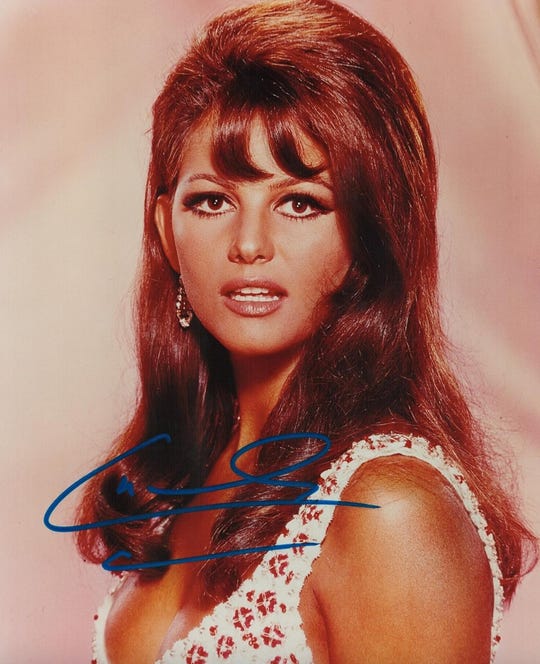
Claudia Cardinale, was a popular French-Italian actress who brought her special brand of sensuality — which to me seemed a combination of Bardot and Loren – to 1960s and 70s European cinema.
Over her career, Cardinale appeared in more than 100 films and television productions.
She was known for her distinctive look— deep auburn hair, dark smouldering eyes and a screen persona that exuded sensuality, intelligence and emotional depth.
Although she had done some Hollywood films, she considered herself a European actress. She turned down exclusive contracts which would limit her freedom.
Cardinale also received many lifetime-achievement honors.
Cardinale recently passed away on September 25th of this year (2025) at the age of 87.

In The Beginning
Cardinale was born on 15 April 1938 in La Goulette, Tunis (then a French protectorate), to Sicilian-Italian parents.
Growing up in a multilingual and multicultural environment (speaking French and Sicilian)
Eventually, she did learn to speak Italian, but many of her early films were dubbed.
Apparently, Cardinale had no aspiration to become a film star growing up.
Although, at the age of 17, she won a beauty contest in Tunis which awarded her a trip to the Venice Film Festival.
This event helped her gain exposure and set in motion her acting career.

Rise to Stardom
Claudia Cardinale’s first credited film role was in Goha (1958), a Tunisian-French production directed by Jacques Baratier.
In Goha, Cardinale played a small part opposite Egyptian star Omar Sharif.
Though her screen time was limited, the film’s success—it won the Jury Prize at the 1958 Cannes Film Festival—helped introduce her to the European film community.
Following Goha, she returned to Italy and began studying acting under contract with the Italian studio Vides, where her early Italian-language debut came shortly afterward in Big Deal on Madonna Street (1958), directed by Mario Monicelli.
That role, though modest, marked the real start of her rise in Italian cinema.

One of her breakthrough moments came with Rocco and His Brothers (1960) directed by Luchino Visconti.
Although 1963 was the year where Cardinale appeared in two major films that cemented her reputation.
First, in Visconti’s – The Leopard (1963).
Cardinale played Angelica Sedara, a seductive ye,t astute young woman in a dysfunctional Sicilian aristocratic setting.
Secondly, she portrayed Claudia, in 8½ (1963) by Federico Fellini, the meta-masterpiece about a film director’s creative crisis, where she embodied an idealised feminine presence.
Cardinale’s range extended to comedic roles as well, such as the hit, The Pink Panther (1963) opposite Peter Sellers.
Then, in the iconic spaghetti western Once Upon a Time in the West (1968) directed by Sergio Leone.

Personal Life and Advocacy
Cardinale was married just once in her life. Although she had several long term love affairs.
Claudia Cardinale had two children:
1. Patrick Cristaldi — born in 1958, he is Claudia Cardinale’s first child. Cardinale became pregnant at 19 after being sexually assaulted in Tunisia. The identity of Patrick’s biological father has never been publicly disclosed.
For many years, Cardinale told people that he was her little brother.
Later, after her marriage to Italian film producer Franco Cristaldi (1966-75), he legally adopted Patrick.
2. Claudia Squitieri — born in 1979, she is Cardinale’s daughter with Pasquale Squitieri. He was an Italian film director and screenwriter who was her longtime partner from 1975 until his death in 2017. Claudia Squitieri has worked as a director and actress, continuing in her parents’ artistic footsteps.
Later on in her life Cardinale became an advocate for women’s rights and environmental issues. She served as a goodwill ambassador for UNESCO and used her status to speak on behalf of causes she believed in.

Recent Death
On 23 September 2025, Claudia Cardinale died in her home in Nemours, France, surrounded by her children.
Tributes poured in from around the film world. In Italy the Culture Minister described her as “one of the greatest Italian actresses of all time”.
Her death marks the end of an era—she was among the last living links to the golden age of 1960s European cinema.