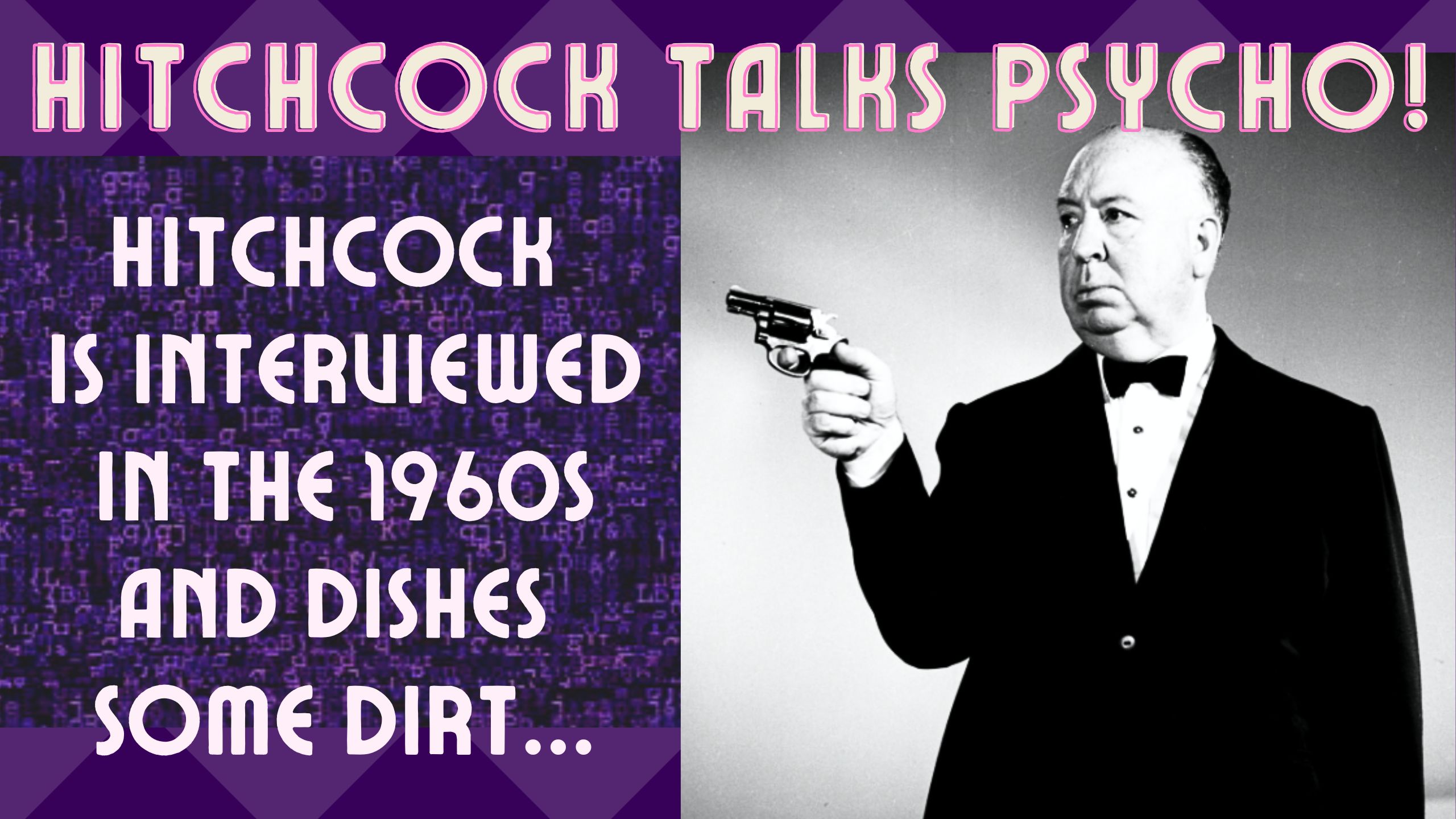
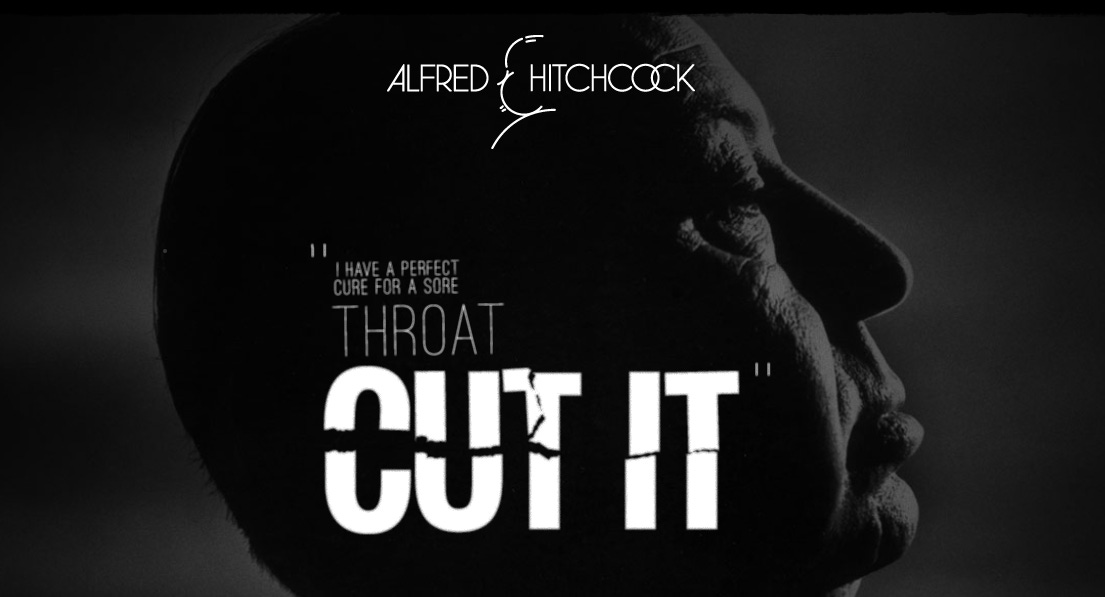
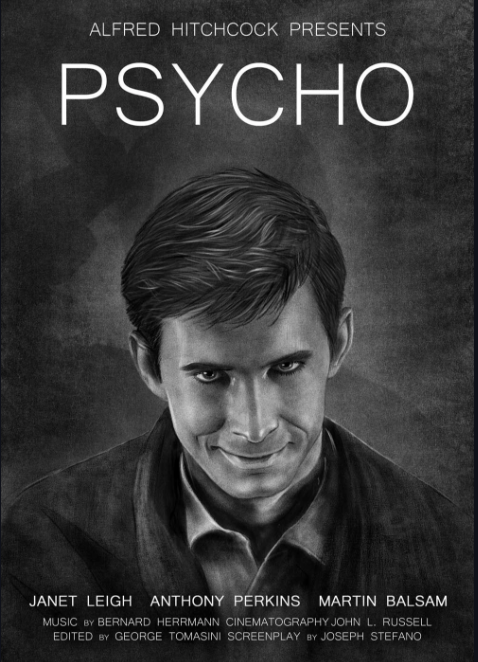
If you like Alfred Hitchcock then you will LOVE this gem of an audio I found in the archives. It’s a compilation of snippets where he is interviewed, mostly about his classic movie Psycho.
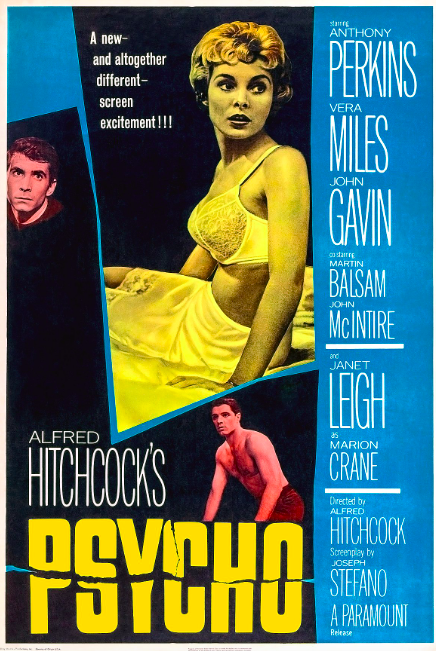
I couldn’t find a date as to when this audio was compiled or when Hitchcock was interviewed for his classic movie Psycho, but my best guess is sometime in the mid 1960s or later.
The classic movie Psycho was released in 1960. He is candid and interesting as you would expect someone in his position would be. I enjoyed listening to this very much and learning quite a bit about this master of cinema. Find a little time for yourself and become intrigued again by a real storyteller.
Find the archived audio of this classic movie here: https://archive.org/details/movies_20191031
TRANSCRIPT of Hitchcock’s Interview/s
How do you do, ladies and gentlemen, my name is Alfred Hitchcock.
You want to tell me you saw Norman Bates’s mother?
But it had to be, because Arbogast said so too, and the young man wouldn’t let him see her because she was too ill.
Well if the woman up there is Mrs. Bates, who’s that woman buried out in Green Lawn Cemetery?
People often complain about the effect of films on certain minds, but they generalize about this. I have to ask them, what minds does it affect? When Psycho was made, a man was arrested for murder in Los Angeles, and he had confessed to killing three women. The last murder he committed, he said, was influenced by the fact that he had just seen Psycho.
So naturally, the newspapers got on to me and asked for my comment. And I said, what film did he see when he murdered the second woman? And am I to assume that when he murdered the first woman, he had just finished drinking a glass of milk?
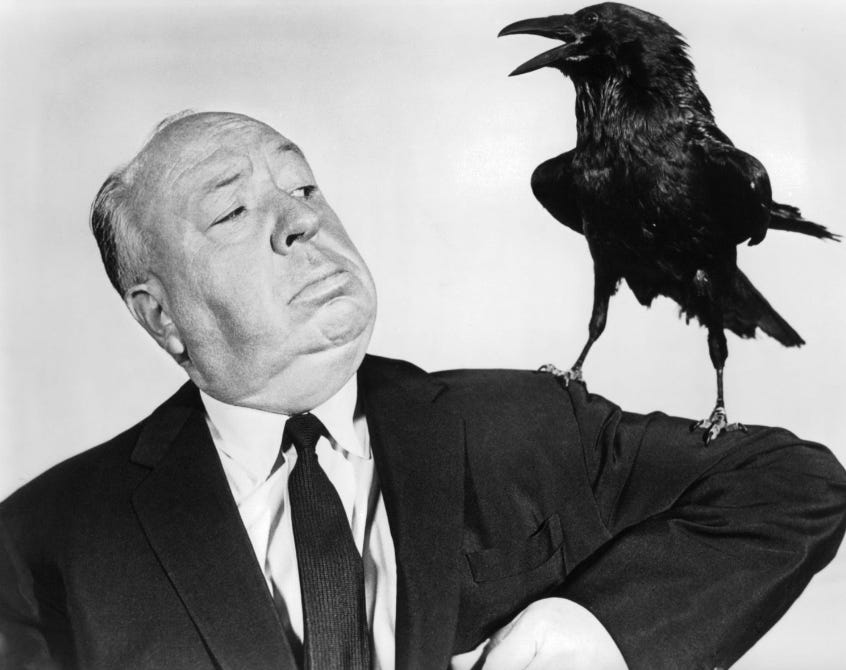
You see, people always generalize. And of course it’s the sick mind that is affected by these things.
You know, people, to me, when they complain, say, about Psycho, they lack the sense of humor that I had to have when I made it. Because you couldn’t make a picture like Psycho (that became a classic movie) without your tongue in your cheek.
They know I can’t even move a finger. And I won’t. I’ll just sit here and be quiet, just in case they do suspect me.
They’re probably watching me. Well, let them, let them see what kind of a person I am. I’m not even gonna swat that fly. I hope they are watching. They’ll see. They’ll see, and they’ll know, and they’ll say, Why, she wouldn’t even harm a fly.
Do you dream vividly? Uh, reasonably so, yes. I’ve, I’ve, uh, I think that’s almost the basis of one’s work, is, um, the making of nightmares with as much realism as you can. Just as in a dream, it is extremely vivid. After all, when you’re on your way to the gallows in the dream, it is so vivid that you’re glad when you wake up.
Have you ever studied, seriously that is, um, psychological textbooks? No.
You once said that, uh, you like to make an audience scream through technical means. What is it about an audience screaming that you like?
How many times have you heard a woman say, Oh, I went to see the movie and had a good cry? That’s true.
They do, you see. Now, what is a good cry? She never says, I went there and had a bad cry. Otherwise she wouldn’t have paid the money to go in the first place. So these people have paid money to be, uh, scared.
Speaking of sexiness, you deal a lot with, uh, sexual aberrations and fetishes as subject matter. You feel this is a good subject matter for suspense?
Well, suspense is, it doesn’t relate really to that.
Then why would you use these Suspense relates entirely to causing an audience to go through emotions, and can only be arrived at by giving them knowledge.
It’s mostly regression. Between the mystery story and the thriller and the suspense story and the whodunit. See, the whodunit is a little bit different. The whodunit, you see, is a intellectual exercise like a crossword puzzle. When you buy a whodunit, you’re terribly tempted to look at that last page. And you don’t because you feel you’ve wasted your money or be disappointed.
But the suspense story is giving the audience full information before you start. In other words, there is a bomb under these seats. Tell the audience that, then they will scream out and say, get out of there, get out of there.
Through the years, you’ve achieved a great deal of fame and success. Do you like your fame? Does it give you a certain amount of pride?
What enables me to sleep at night?
You’re making a joke of the question, but No, I’m not making a joke. I never have really. Hard question to answer because I mean, does it ever make you feel happy or proud to arrive at an airport and have cameramen and reporters and people there to greet you?
Some of the things like that are nice. I remember once arriving at Tel Aviv. And coming down the steps and having the whole airport applaud. Well that was very nice. And once I was standing in the middle of the square at Copenhagen. There’s a, it’s a very large square on the roadway, there’s an intersection.
And suddenly I heard the sound of an ambulance siren screaming. It came from the far corner of the square. I was just standing there, no camera or anything, uh, with an assistant. And suddenly this ambulance stops at the intersection. A man jumped out. Came rushing toward me, said autograph please. I gave him the autograph.
He rushed back to the ambulance. They started the siren and he went on his way.
Who was it?
That’s what I don’t know. I don’t even know whether the autograph was for the patient or the driver.
If you walk along the street and you see a street accident and a man’s lying there, you say, poor fellow, knocked down by an automobile. Take a second look and it’s your brother. Look at the difference in the emotions. And that’s why not only the identification, but the, but the quality of identification also matters and is a contributory thing.
You see, it all starts with a baby, we’ll say, at the age of six months. And the mother says, “Boo!”
It scares the hell out of the baby, gives it the hiccups. And then the baby giggles. There’s its first moment of fear. Later on, it’s on a swing, getting higher and higher. And catching its breath when it goes too high.
And so it goes. We all enjoy, shall we say, putting our toe. In the cold water of fear. Suspense can only be achieved by telling the audience as much as you can. I don’t deal in mystery. I never make whodunnits because they’re intellectual exercises. You’re just wondering. You’re not emoting. My old analogy of the bomb.
As an example, uh, we could be blown up this minute and the audience would get five seconds of shock. But if we tell them five minutes ahead of time, there is a bomb that’s going to go off. Now we get five minutes of suspense. Didn’t have suspense before because the audience were in ignorance. That’s a big difference.
The nightmares have to be awfully vivid. You’re very glad when you wake up, just as you’re about to drop through the trap on the gallows. It’s all been so vivid and real to you in the nightmares.
So therefore, while I may have a bizarre situation, the treatment of it is very accurate.
You know the famous story, which is always quoted as an example of the humor of the macabre by the Londoner, when, um, an English comedian died and was killed in the last war. At the cemetery, the Bulk of the mourners were fellow comedians. And one mischievous young one leaned to an old one and said, “How old are you, Charlie?”
And the old one said, Ooh, he said, I’m 89. Young one said, Hardly seems worthwhile going home, does it?
Are you still with us?
Please don’t think me presumptuous if I give you, say, the analogy of, say, a painter who paints a tree, a landscape, or even a bowl of fruit. I’m sure that the painter is not a bit interested in the apples for themselves alone, but in the technique of his work which stimulates. The emotion of the viewer of his picture.
After all, all art is experience. People look at an abstract and say, I hate it.
Well, the mere fact that they’re using the word hate means that they’re going through an experience, you see. And, uh, uh, or they like it. Therefore, if you apply these principles to film, as I see it, Uh, it is not the pure manner of the content.
In other words, it’s not the story. It’s what you do with it. Not what, but how. How. And therefore, uh, I find that with many people, Uh, they look at a film and they look at its content only and never seem to study, I’m talking about the critical faculty, Uh, uh, What was there in the film to make an audience go through these various emotions that you put them through?
Especially in my field, which is thrill or suspense or what have you.
I’m not very gregarious. I don’t mix with a lot of people. Um, I don’t think I’m very good in the company of a lot of men. Or, um I don’t know what it would be like among a lot of women. I don’t know.
Well, you have two kinds of what we might call montage. I think we call it cutting. It isn’t exactly that. Uh, cutting implies severing something. It really should be called assembly. Mosaic is assembling something to create a home. Montage means the assembly of pieces of film, which, moved in rapid succession before the eye, create an idea.
Of course, the most elementary form is the, uh, Uh, juxtaposition of imagery, uh, in various sizes. You know, a lot of people think that cutting is, or we’ll say montage or assembly, is taking a man from one place to another and jumping into a close up of him.
Which Griffith invented, it’s true. But, um, to me it goes much deeper.
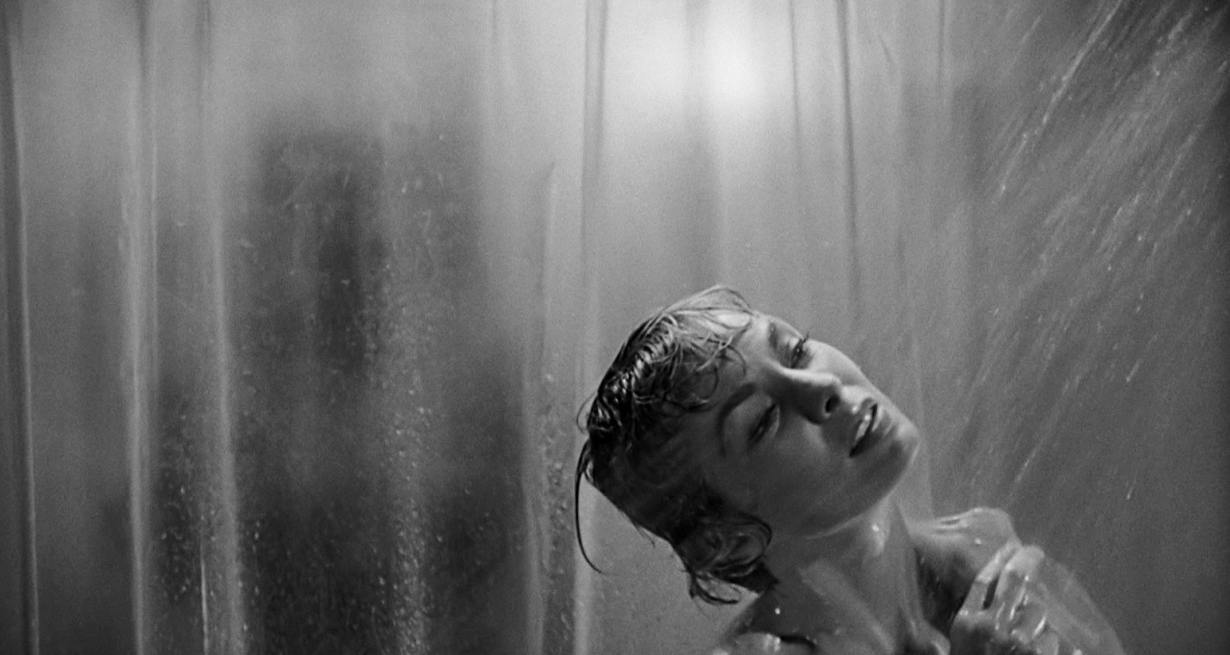
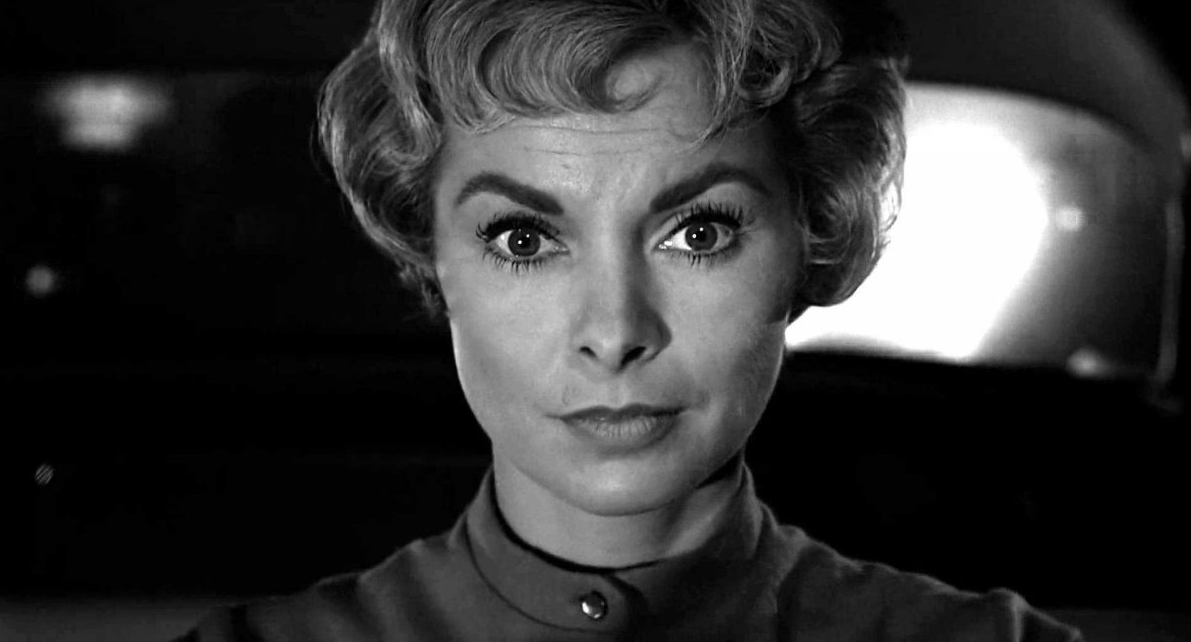
And as I say, The picture Psycho contained quite an amount of cinematic approach to this, to its basic content. In the first place we had in it the murder of a woman in the shower, a nude woman. Now as you know, you could not take the camera and just show a nude woman being stabbed to death. It had to be done impressionistically.
So it was done with little pieces of the head, the feet, the hand, parts of the torso. Everything, you see, was used. The shower itself. I think in that scene there were 78 pieces of film in about 45 seconds.
Now that’s one kind. Now we’ll take another kind, which I would prefer to call, say, the orchestration. Loud notes, soft notes, and so forth. The second murder in Psycho was treated quite differently. It showed a detective coming up the stairs. The audience already aware that a monster was around. So they were apprehensive for him.
But they didn’t know when it was going to happen. So I have this man mounting the stairs in what we will call a medium shot, a waist shot. He gets to the top of the stairs.
Then I take the camera and put it very, very high. Way, way high. Above the ceiling. As though we’re looking down on the whole thing.
And a little figure runs out with a raisin. And the hand goes up with the knife. Into the air, and brings it, starts to bring it down. Now remember, these are two tiny figures. Then the next is a big head of the man, as the knife goes across his face.
Now, this is size of image put together to create shock. In other words, if it were music, it would be tremolos on the violin, and suddenly, a brass instrument, which is a bit closer. And from that, he fell. And went back.
So there’s an illustration of using the size of the film, of the image to create shock or whatever you will.
Now, the third way is what one might call pure cinematics, the assembly of of film and how it can be changed to create a different height. Now we have a closeup, then we show what he sees. Let’s assume he saw a woman. Holding a baby in her arm. Now we cut back to his reaction to what he sees, and he smiles.
Now what is he as a character? He’s a kindly man. He’s sympathetic. Now, let’s take the middle piece of film away, the woman with the child. But leave his two pieces of film as they were. Now we’ll put in, uh, a piece of film of a girl in a bikini. He looks. Girl in a bikini, he smiled. What is he now? A dirty old man.
He’s no longer the benign gentleman who loves babies. That’s different. That’s what film is.
Oh no, no. Rupert, I couldn’t believe it was true. Rupert, please. Please what? Listen to me. Just listen. Let me explain. Explain? Do you think you can explain that? Yes, to you I can. Because you’ll understand. Understand? Rupert, remember the discussion we had before with Mr. Kentley? Remember we said, The lives of inferior beings are unimportant.
We’ve always said, you and I, moral concepts of good and evil and right and wrong don’t hold for the intellectually superior. Remember, Rupert? Yes, I remember. That’s all we’ve done. That’s all Philip and I have done. He and I have lived what you and I have talked. I knew you’d understand because you have to, don’t you see?
You have to.
Thank you for reading/watching/listening to this audio about Alfred Hitchcock and his classic movie… Psycho.
Thank you for your interest in The Body House brand.
JOIN Old Hollywood Newsletter – https://bodyhousechronicles.substack.com
Relationship SAVING HUG – Soulmate Embrace {FREE eBook} – https://bit.ly/32vEbzQ
30 Romance Tricks That Work Like Magic {FREE Ebook} – https://bit.ly/2ZVJuXM
Relationship Magic – Free eBook – https://bit.ly/2ZDutcW
ALL Links – https://linktr.ee/bodyhouse1
Contact: thebodyhouse.biz@gmail.com
Relaters Manual eBook For Men https://www.smashwords.com/books/view/888887
Try these suggestions from Susan Bratton…
Relationship SAVING HUG – Soulmate Embrace {FREE eBook} – https://bit.ly/32vEbzQ
Relationship Magic – Free eBook – https://bit.ly/2ZDutcW
Heal Karma with Sexual Tantra?
Was SHE the First Hollywood Tragedy?
Don’t Forget to Get That Beautiful Mug on a Mug!